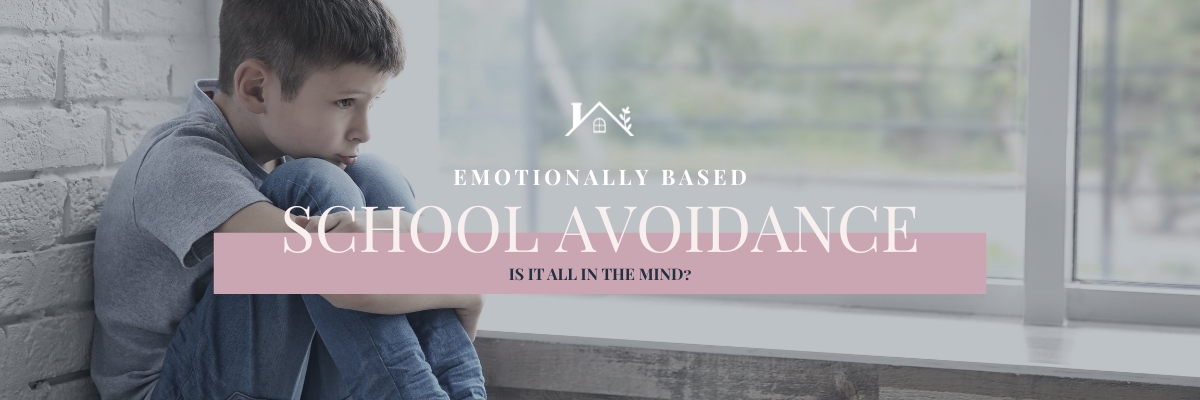
Emotionally Based School Avoidance – All in the Mind?
In comparison to the end of last week, when Sam visited his new school and spent some time in class. This week was the complete opposite. I knew very little about Emotionally Based School Avoidance (EBSA) until last year when Sam had issues accessing school. ESBA is a term used to describe children and young people who experience significant difficulties attending school due to negative emotions and anxieties.
Here’s a breakdown of ESBA:
- Emotional Triggers: Anxiety, fear, or other negative emotions are the main reasons a child avoids school.
- Difficulties Attending: These can range from occasional absences to complete school refusal.
- Not Truancy: ESBA differs from truancy, where a child skips school intentionally without a valid reason.
Causes of ESBA can vary but may include:
- Bullying
- Social anxieties
- Specific learning difficulties
- Transitions (e.g., starting a new school)
- Mental health conditions like depression
Transition & Change
For Sam, the transition to a mainstream secondary school had been too much. As the weeks and months went by his ability to cope reduced. Despite every effort to integrate his level of study into a mainstream setting, he became more and more dysregulated. His differences became more obvious, and the once-happy boy I knew became withdrawn and angry.
The fight to get him into a specialist setting more adept at educating him and letting him thrive wasn’t anywhere near as bad as some families I know, and for that I am thankful. Yet it wasn’t without its struggles either. However, as many of you know we managed to secure his place for this Sept at the school of our choice. I thought the fight was over. How wrong I was…
It’s not a choice!
By this time Sam was accessing school less and less, and by Spring Term we were lucky if he managed to go to school once a week. School have offered various solutions, but they’ve all just been too little too late. The damage was done by then and he would shut down at the mere mention of school. To some, this is hard to understand. They can’t see past the behaviour, so see a kid refusing to go to school and ‘getting away with it’. What they don’t see is the emotional turmoil the child goes through just trying to access that education and the dysregulation it causes if they do manage to get to class.
Here’s a snapshot of the current situation in the UK:
- Sharp Increase: Persistent absence rates (missing 10% of school) have soared since the pandemic. In the 2022/23 Autumn term, 22.3% of pupils were persistently absent, compared to 10.9% pre-pandemic (2018/19) – more than doubling [Anna Freud, Children’s Commissioner].
- Underlying Issues: EBSA is the root cause for a significant portion of this increase. While exact numbers are tricky to pinpoint, estimates suggest 1-2% of those missing school persistently do so due to emotional reasons [Absolutely Education UK].
- SEND and EBSA: Children with Special Educational Needs and Disabilities (SEND) are particularly vulnerable. Absence rates for pupils with an Education, Health and Care Plan (EHCP) are significantly higher (12.1% vs 6.8% without SEN Support) [Beyond Autism].
Additional Points:
- Pre-existing Trend: Even before the pandemic, persistent absence rates were steadily increasing.
- Mental Health Connection: Many experts believe the pandemic exacerbated mental health issues in children, contributing to EBSA.
- Impact on Learning: Missing significant school time can have a detrimental impact on a child’s education.
A Long Road to Recovery
Having had such a positive step with Sam the week before, I wrongly forgot just how much he struggles with transition and change. When Monday came he flat out refused to go to school. A transition morning that Wednesday for all the new kids starting in Sept (3 plus Sam) seemed like a good opportunity for Sam to try again, as he wouldn’t be the only new kid. We managed to get as far as the school reception, I could see he was struggling. We went home and he had one of his worst days in a long time in terms of dysregulation, and meltdowns. I haven’t felt such a failure in a long time.
He’s begun asking to go to his mainstream school instead (it’s familiar and ‘comfortable’ in a weird way). They even offered alternative provision but I’ve not taken up the offer as I think it will just confuse him. For me, we have to remove all other options and let him focus on accessing his new setting. He has so many negative emotions associated with school, it’s gonna take time.
I’m the worst mum in the world as I’m making him move to a new school, make new friends and get to know new teachers. Right now he can’t see past that change. It’s going to be a long process. It’s so funny how many people asked me after Friday ‘So, is that him all settled now?’. If only it were that easy. Parents of SEND kids and those struggling with Emotionally Based School Avoidance will completely understand the journey.
In the meantime, I still haven’t heard from CAMHS about his further assessments. Until I hear from them, then I don’t know exactly what he is being assessed for. I feel utterly lost if I’m honest. He’s struggling so hard and it’s difficult to watch, I know it will take time. In the meantime, we still don’t know his actual diagnosis to ensure we are correctly supporting him. Develop strategies that will actually help him, rather than possibly trigger him. So it’s off to hyperfocus on all things EBSA for a bit, will see you on the other side…