Author: faystephenson

  • Seeing Our Kitchen, Boot Room & Utility Designs for the First Time

    Seeing Our Kitchen, Boot Room & Utility Designs for the First Time

    There’s something magical about the moment you finally receive the first proper designs for your kitchen, boot room, and utility. After months of planning, measuring, mood-boarding, and daydreaming, suddenly it all becomes real. Today, that moment arrived for us, and it feels like the start of a whole new chapter in bringing this old house back to life.

    When the email arrived this morning from James at Omega PLC, I was in full work mode, but I couldn’t help myself…

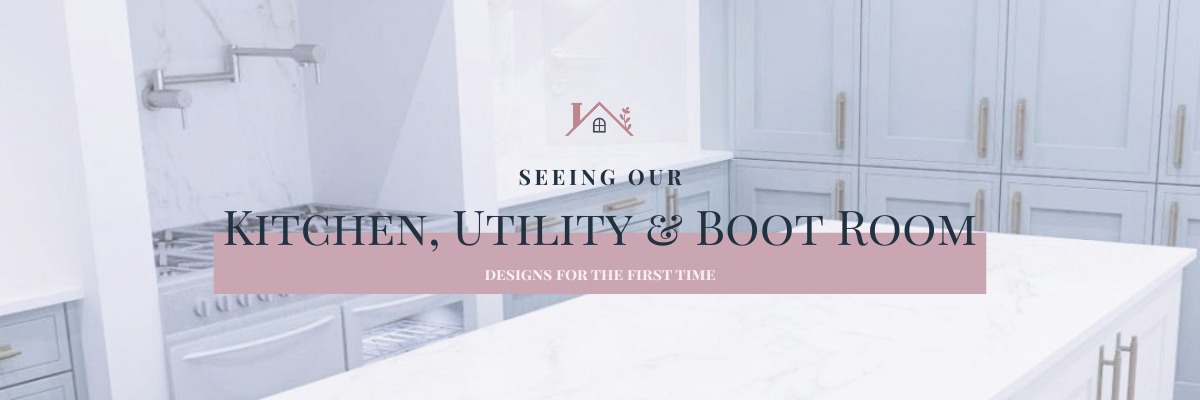
    Opening the email felt a bit like opening a present you’ve been waiting ages to open. Each image suggestion offered a glimpse into how some of the oldest rooms in the home will function for us in day-to-day life. For a neurodiverse household like ours, flow, clarity, and intuitive organisation aren’t just nice-to-haves—they’re essential. And seeing it all mapped out so thoughtfully was genuinely exciting.

    The proposed kitchen layout balances practicality with warmth, giving us a space that feels welcoming without compromising on storage or efficiency. The boot room design is particularly exciting: a designated drop zone for muddy shoes, bags, coats, and everyday chaos. If any space is going to save our sanity on busy mornings, it’s that one. And the utility room feels like the unsung hero—tucked away but designed to make laundry, cleaning, and general household upkeep run so much smoother.

    Through the whole kitchen design planning process we very much wanted to keep a traditional feel to the kitchen. In terms of look, colour and cabinet hardware; but also ensuring that it had a timeless feel with a modern shaker style.

    Of course, seeing the first round of designs also sparks a flood of ideas. Maybe you want to tweak the lighting positions, add more built-in storage, shift a window, or incorporate materials that echo the original character of the house. This early stage is all about refining, imagining, and making sure the design truly reflects how your family lives.

    I added the boot room detail from the original concept, along with a tall cabinet specifically to house the ironing board, mop etc. But am especially excited about my pull out ‘drawers’ under the washer & dryer, so I can place the wash baskets on when filling/emptying the machines. Oh and my pot tap above the range!

    Now that the designs are here, everything feels more tangible. It’s the start of transforming these essential rooms into spaces that work for our family—not just aesthetically, but practically, emotionally, and functionally. And honestly? It feels incredibly exciting.

    I’d love to know what you can’t live without in your kitchen, or something you wish you had? Comment below, can’t wait to hear!

  • Moving to Thornton-Le-Dale: The Complete Relocation & Living Guide

    Moving to Thornton-Le-Dale: The Complete Relocation & Living Guide


    Moving rurally is about trade-offs. Use this simple decision matrix: list what you must have (schools, job commute limit, broadband), would like (community groups, play spaces) and dealbreakers (long hospital journeys, no public transport).

    Questions to answer

    • What’s your commute tolerance? (time & flexibility)
    • Can you work remotely if transport isn’t ideal?
    • Do you want a strong village community vs more anonymity?

    Thornton-le-Dale offers cottages, period houses and small modern builds. Many properties are older with character, which means attractive features but also maintenance obligations — especially if a property is listed (see the restoration guide for detailed planning). When house-hunting, factor in: roof condition, damp, insulation, and whether windows or fittings are original (replacement may need consent).

    Actionable checklist for viewings

    • Ask for recent drainage & damp reports.
    • Check for evidence of thatch/roof repairs.
    • Find the property’s listing status via the local council or Historic England.

    Families often prioritise local schools. Thornton Dale is served by Thornton Dale Church of England Primary School, a small village primary with local catchment arrangements. Ofsted rated as Good/Outstanding in 2025 — phone the school for admissions and up-to-date guidance. thorntondaleprimaryschool.org

    Secondary schools: older children typically travel to nearby towns (for example Pickering) for secondary education—check transport and catchment zones early in your planning.

    Specialist schools: Wellburn Hall in Kirbymoorside is the Local Authority maintained school. Ofsted rated as Good in 2022 – phone the school for admissions and up-to-date guidance. https://www.welburn-hall.n-yorks.sch.uk

    Tip: Visit the school during term time to get a feel for daily life


    Thornton-le-Dale punches above its weight for a village: cafés, pubs, a market green, tearooms, antique shops, a gift shop, a book/craft store and a motor museum. Plus, easy access to Dalby Forest and stunning walking routes — great for families who love the outdoors. The village is popular with visitors, especially in summer, which can make life a little busier, but it’s also part of it’s charm.

    How to test community fit

    • Visit at different times of the week and visit cafes and shops.
    • Look for local Facebook groups or the village noticeboard.
    • Check the parish council noticeboard/village shop for events and volunteer opportunities.

    Thornton-le-Dale is rural: many families rely on cars. For commuting, check drive times at the hour you would travel (peak vs off-peak). Public buses and seasonal services operate in the area, but schedules can be limited — factor this into daily routines.

    Packing tip: Keep your pantry stocked with essentials and an emergency kit (medicines, medical supplies, torch, snow shovel etc.) during the first winter in a rural property.


    Primary healthcare is generally delivered in nearby towns. Ask the GP surgery & dentist about registering new patients and where the nearest urgent care or A&E services are. There is a pharmacy and post office in the village. The local sorting office is in Pickering.


    Reliable broadband is a make-or-break factor for remote working and schooling. Check the property’s broadband speed with the provider before exchange and, if needed, budget for upgrades or alternative solutions (e.g. 4G/5G routers).


    • Removal firm: choose one with rural experience (narrow lanes, limited parking).
    • Access & parking: check whether the property has off-street parking or a car park nearby.
    • Deliveries: note that large deliveries may need local access arrangements.

    • Enrol in local clubs (rugby, Scouts, Brownies) — small villages often have vibrant volunteer groups.
    • For younger children, arrange play dates early — meeting one family is enough to open doors.
    • Keep weekend routines flexible for outdoor exploration — woods, becks and nearby attractions become your local playground.

    • Factor in higher heating costs for older homes.
    • Get quotes for insurance that covers rural issues (subsidence, thatch).
    • Check council tax band and waste collection arrangements.

    First 30 days: Register with a GP and register children at school (if needed); introduce yourselves to immediate neighbours. Sort broadband and set up utilities.
    30–60 days: Join a village group or community class.
    60–90 days: Explore local walking routes, maybe volunteer.


    Thornton-le-Dale is a lovely place for families who value community, access to nature and character homes — but it’s rural, so plan for travel, services and maintenance. Visit in different seasons if you can: winter feels different to summer. For latest village events and amenities, the parish and North York Moors sites are excellent starting points.

    We had passed through Thornton-Le-Dale so many times on our way to Dalby Forest with our youngest and always loved the feel of the village. Everyone has been so friendly and welcoming, and we fell in love with our house hte minute we saw it. We can’t wait to restore it to it’s former glory, with lots of TLC.

  • The Ultimate Family Life Guide to Thriving at Home (For Neurodiverse Families)

    The Ultimate Family Life Guide to Thriving at Home (For Neurodiverse Families)

    Thriving Together in a Neurodiverse Home

    Family life looks different for everyone — especially in a neurodiverse household, where each member brings unique strengths, needs, and ways of experiencing the world. If there is one thing I’ve learnt over the past 20 years, creating a thriving home isn’t about perfection; it’s about designing systems, spaces, and rhythms that support everyone’s brains and bodies.

    This guide explores practical, compassionate ways to build balance — whether you’re parenting children with ADHD or autism, managing your own executive function, or simply seeking a calmer, more connected home environment.

    At the moment, we dont have a norm. For the past 3 years since our youngest started secondary school, we’ve been dealing with EBSA (Emotionally Based School Avoidance) and trying to find him the right learning environment. Alongside that we have two older boys who are at University and in the Army, their trips home are infrequent and can be short notice. Oh, and of course, we decided to add into the mix the purchase and renovation of our beautiful grade 11 listed home in Thornton Le Dale just for fun.


    No two neurodiverse families are the same, but there are common threads that can help shape a supportive environment. Neurodiversity includes differences such as ADHD, autism, dyslexia, dyspraxia, learning and sensory processing differences — all of which influence how we communicate, plan, and interact.

    • Celebrate strengths: Every family member brings unique problem-solving abilities, creativity, or focus areas.
    • Prioritise predictability: Consistent routines reduce anxiety and decision fatigue. This really helps us!
    • Support sensory regulation: Lighting, textures, and noise levels deeply affect how safe and comfortable everyone feels.
    • Reduce judgement: “Normal” doesn’t exist — build systems that work for your family, not anyone else’s. It took me a long time to learn not to care about what other people think.

    A home that helps your family thrive doesn’t need to be minimalist or “perfectly tidy”, in fact it rarely will be. It needs to be functional, flexible, and soothing.

    • Use soft lighting and dimmable bulbs to reduce visual overstimulation.
    • Create quiet corners or “retreat zones” for decompression after school or work.
    • Add weighted blankets, beanbags, or swings to meet sensory regulation needs.
    • Avoid strong synthetic scents or flickering lights.

    Traditional systems often fail neurodiverse families because they rely on sustained executive function.

    Instead:

    • Label drawers and storage using visual cues (icons or photos).
    • Use clear bins for visibility.
    • Keep duplicates of key items (chargers, school jumpers) to reduce panic moments.
    • Use colour coding for family schedules.

    In our old home I had a ‘whiteboard’ wall planner (approx 3m x 2m) for the whole month, each member of the family had a different colour and all activities, work commitments, events etc. were written on there. It worked so well for us! We won’t have the room in the new house, so I’ll have to figure out something new… we might go digital!


    Routines are the backbone of neurodiverse family life — but they must be flexible, not rigid.

    • Visual timetables or whiteboard schedules work better than verbal reminders.
    • Create “transition rituals” — small, predictable actions that help switch between tasks (e.g. a snack before school or a cuppa after work). Even the smallest transition can be triggering.
    • Keep “buffer time” between commitments; rushing triggers stress responses. Try not to make last minute changes where absolutely possible.
    • Use tech wisely: set smart reminders, shared calendars, and Alexa routines to externalise memory tasks.
    • Mornings: Minimise choices. Pre-pack bags and lay out clothes the night before.
    • Evenings: Establish a predictable wind-down sequence (screens off, soft light, calming activities).

    School bags were always packed the night before and even I laid out my clothes for the next day. However, when I hit peri-menopause and my symptoms were exarcebated, meant I struggled to cope with the routines we used to follow. Luckily, with our youngest’s needs being much higher, then we had to reduced expectations even more, which has allowed me to do the same, so we just about manage. And when we don’t, that’s okay, it’s not the end of the world!


    Open communication is essential in neurodiverse families — but it’s not always straightforward.

    • Use clear, literal language; avoid idioms that can confuse.
    • Encourage emotion naming using visual charts or “feelings thermometers.”
    • Model repair: it’s okay to apologise and reset after conflict.
    • Validate rather than minimise feelings — especially around sensory overload or frustration.

    Creating emotional safety means everyone knows they can express themselves without fear of shame.

    When our youngest was overwhelmed and dysregulated, he would begin to shut down and couldn’t verbalise how he felt. I found having visual charts and cards invauable to let him show me how he was feeling.


    Executive function challenges — planning, organising, time management — are common in neurodiverse families.

    Instead of fighting them, design external systems that reduce mental load.

    • Whiteboards or magnetic planners for shared visibility.
    • Timers or time-blocking apps to manage transitions.
    • Checklists for recurring tasks (morning routine, weekly reset).
    • Body doubling — working alongside another person to maintain focus.

    We pretty much used all of these, but visual checklists for self-care tasks were especially useful on a morning. And as we moved into the teen years then setting ‘times’ for app down-time etc. really helped signal transitions.


    When one family member is dysregulated, it often ripples through everyone else.

    This makes self-care not optional, but essential.

    • Schedule quiet recovery days after social or sensory-heavy events.
    • Encourage parallel play or “alone together” time for downtime.
    • Parents: model rest. Your calm nervous system anchors the household. My kids will absolutely pick up on when one or both of us are stressed/dysregulated.

    I must admit this is probably one of the hardest thing for me. I rarely get time for myself, and a lot of my time is spent looking after others. I do make sure that at least once a week I have catch up drinks with either a friend or family. No phones, no computer, just a cold glass of Cava and good company!


    Thriving at home doesn’t mean perfect systems or Instagram-worthy organisation.

    It means everyone feels seen, safe, and supported.
    Embrace humour, celebrate small wins, and recognise that the most meaningful progress often comes from learning together through chaos.

    Quite often the carefully curated image on Instagram, fails to show the absolute carnage that is either underneath or behind the shot! I keep that for the stories, but I will always show the reality too.


    A thriving neurodiverse family home is one built on understanding, compassion, and creativity — not conformity.
    When you design your routines, spaces, and systems around your family’s real needs, you unlock more energy for joy, connection, and growth.

    You don’t have to fit into the world’s definition of balance — you can build your own.

  • Restoring a Grade II Listed Victorian Farmhouse: Everything You Need to Know

    Restoring a Grade II Listed Victorian Farmhouse: Everything You Need to Know

    Restoring a Grade II listed farmhouse gives you character, history and unique architecture — but it also brings legal obligations, specialist procurement and a patient timeline. This guide walks you through pre-purchase research, statutory consent, selecting professionals, budgeting and practical conservation approaches so you understand the full scope before committing, along with a couple of hints from what we’ve learned so far!


    A Grade II listing identifies a building of special architectural or historic interest. Any alteration that affects the character of the building requires Listed Building Consent from your local planning authority — even interior changes in many cases. Always consult your local conservation officer early: it can save time and avoid rejected applications.

    Key takeaway: Don’t assume “cosmetic” changes won’t need consent — if the work affects character, it likely needs formal approval.


    Before exchange, carry out thorough checks:

    Essential reports

    • Full structural survey (not just a mortgage valuation).
    • Damp & timber report (timber frames, rot and insect damage are common in older buildings).
    • Roof and thatch inspection (if present).
    • Historic research — identify original features and previous alterations; some changes may be later additions you can alter more easily but not always.

    Red flags to watch for

    • Extensive rising damp requiring replacement of historic plaster.
    • Unsuitable modern interventions that are costly to reverse.
    • Unknown ownership of historic fixtures or curtilage structures (sheds, boundary walls).

    Process overview

    1. Informal pre-application meeting with the conservation officer — discuss likely acceptability.
    2. Conservation architect or surveyor prepares detailed plans and heritage impact statement.
    3. Submit LBC application to the local authority (there’s no fee).
    4. Possible parallel planning application if extensions or external changes are planned.
    5. Work only after consent is granted — unauthorised work can lead to enforcement action.

    Historic England guidance and advice notes are a crucial reference when preparing applications and understanding what will and will not be acceptable.


    • Conservation architect — essential for sympathetic design and LBC applications.
    • Heritage surveyor — structural and materials expertise.
    • Specialist tradespeople: lime plasterers, stone masons, thatchers, sash-window specialists, joiners skilled in traditional methods.
    • Project manager experienced with listed properties (recommended for complex projects).

    Tip: Ask for portfolios of previous listed-building work and references.


    Traditional materials (lime mortar/plaster, sash windows, breathable insulation) preserve the building’s fabric and avoid long-term moisture problems.

    Thermal upgrades:

    • Internally insulate carefully (vapour-permeable systems).
    • Consider secondary glazing rather than replacing original sash windows where possible.
    • Modern insulation solutions must be chosen to avoid trapping moisture and damaging historic fabric.

    Note: Energy improvements often need sensitive detailing and may require LBC for visible changes.


    Costs vary hugely; older roofs, structural timber work or thatch re-thatting substantially increase budgets. A realistic restoration timeline for a medium-scale Victorian farmhouse could be 12–24 months from detailed design to completion for complex work — longer when significant conservation is required.

    Budgeting tip: Add a 20–30% contingency for unforeseen issues (timber rot, hidden defects). We discovered a huge amount of woodworm, weevil infestation, dry rot, and damp throughout the property.

    Practical estimate categories

    • Surveys & designs: 2–5% of build budget.
    • Specialist conservation trades: high unit cost due to skill level.
    • Mechanical & electrical upgrades: necessary but must be sensitively integrated.

    (Refer to reputable trade quotes for accurate numbers in your area.)


    • Source trades via conservation organisations, local conservation officers, or references from previously restored properties.
    • Use staged payments tied to milestones and require materials to be approved by you or the conservation architect.
    • Keep an annotated photographic record of all original details before work starts — this helps with conservation records and future resale.

    Damp & rising moisture: address source first (drainage, gutters), then repair breathably with lime-based products.
    Subsidence or settlement: get a structural engineer; underpinning or soil stabilisation may be needed.
    Original windows & doors: repair rather than replace where possible — joiners can draught-seal and repair sashes.
    Services (plumbing, electrics): route carefully to minimise cutting historic fabric; trunking and surface conduits may be preferable if reversible.


    Grants for private residential restorations are limited; check with Historic England, local heritage trusts and your local authority for any small grants or advice programmes. Tax reliefs are rare for private homeowners, but VAT rules can sometimes apply to listed building repair works — seek professional tax advice early.


    • Planning permission may still be required for extensions or changes to curtilage.
    • Scheduled monument consent applies only if the building or land is scheduled (rare for typical farmhouses).
    • Building Regulations still apply for work affecting structure, drainage or fire safety — these are separate from LBC.

    • Keep all consents, drawings and photographs together.
    • Prepare an operations manual describing maintenance schedules (thatched roof checks, stone repointing, timber treatment).
    • Regular small maintenance avoids bigger interventions later.

    1. Pre-purchase (1–2 months): surveys, research, pre-app advice.
    2. Design & consents (3–6 months): conservation architect drawings, LBC & planning.
    3. Tender & hiring (1–2 months): pick contractor, agree milestones.
    4. Works (6–18 months): structural, roof, services, finishes.
    5. Handover & maintenance planning (1 month): snagging, documentation.

    • Historic surveys completed and reviewed.
    • Clear understanding of consents required.
    • Budget with contingency.
    • Quotes from specialist trades.
    • Evidence of where original features must be preserved.

    If in doubt: pause the purchase, get more specialist advice — once irreversible work is done, you can’t always put it back.

    Highlight: Discovering the two main reception rooms still had full height, working wooden shutters which were built in to the wall frames was possibly my happiest moment. That along with discovering old plans of the house in a trunk up in the eves!

    Lowlight: We found that a large portion of the woodwork in the house was affected by an untreated weevil infestation.

    A listed Victorian farmhouse rewards patience with character and a deep sense of place, but it asks for stewardship. We are merely guardians of the farmhouse: respecting its fabric, working with conservation professionals, planning finances carefully and documenting everything. The result is not merely a house restored — it’s history lived in and conserved for the future.