Category: Renovation Journey

  • Farmhouse Friday #2 — the kitchen arrived. We were not ready.

    Farmhouse Friday #2 — the kitchen arrived. We were not ready.

    Disclosure: this post contains affiliate links. If you purchase through my links I may earn a small commission, at no extra cost to you. I only ever recommend products I use and genuinely believe in.

    I’d planned the kitchen renovation down to the tee. Spent hours/days (yep, really!) measuring, re-measuring and planning the kitchen by myself. We’d known for over a month what week it would arrive. So, of course, sods law we had no workmen here the week before. My husband was away playing in a squash tournament. The kitchen floor hadn’t been prepped, and it arrived a day early!

    When we bought the house, the kitchen was still quite intact. However, it was quite modern, and not at all what would be found in a Victorian farmhouse. We were able to remove all the units, but there is a small cupboard at work surface height, which was located in the corner of the kitchen. This cupboard is listed, so has to remain. It has been the hardest part of the kitchen renovation to design around, and I’m still worried it may throw us a curveball.

    Victorian farmhouse kitchen renovation

    We’ve gone for a shaker style kitchen, with range cooker (from our previous house), kitchen island and integrated appliances. It is more of a simple modern shaker style than our previous kitchen. But still in keeping with the farmhouse. There will be some open shelving in the utility and boot room, but we’ve yet to decide on worktops… and flooring…

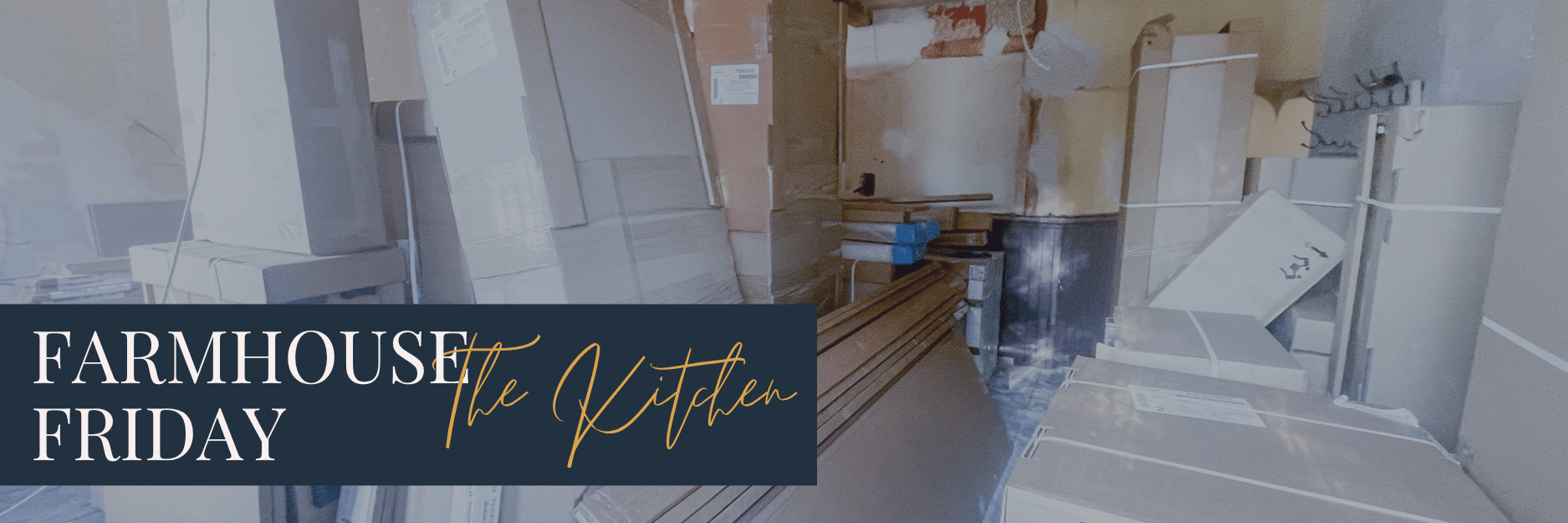
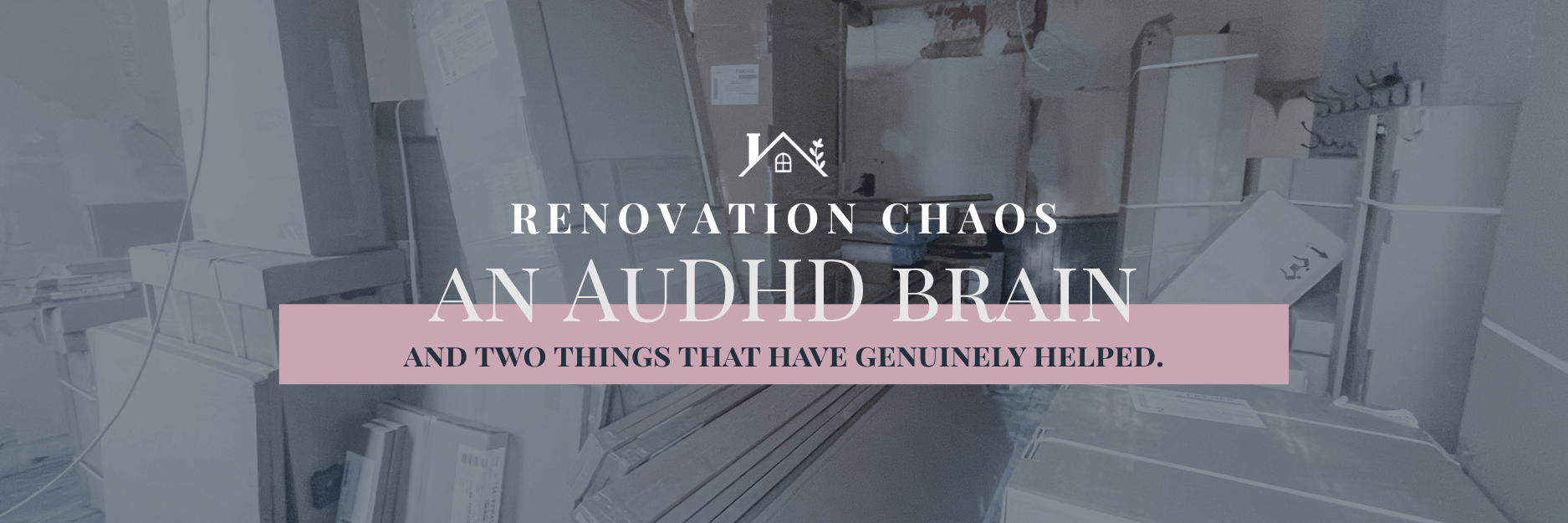
    We were obviously hoping to have the flooring ready so could have put the floor units ‘in place’ as they arrived. But, that wasn’t to be. The delivery guys were great and so accommodating. They kept the three deliveries (Kitchen, Boot Room & Utility) separated when storing in the dining room. This should hopefully help the kitchen fitter as he starts on the kitchen next week.

    On weeks like this one, I’m especially grateful for Rebel Rituals — the hormonal chaos of perimenopause and ADHD, on top of renovation stress is its own particular kind of overwhelming. Having something that takes the edge off the symptoms makes the rest slightly more manageable.

    Victorian farmhouse kitchen renovation

    So finally this week, the kitchen was cleared, the underfloor heating matting went down and the screed went down to level the floor. Ready for the kitchen fitter on Tuesday. Floor tiles will go down after the units are in place. We also have to choose our worktop which I’m really undecided about. I really wanted wooden worktop, but I understand the hubby’s concern about burn/scorch marks from hot pans etc.

    So make sure you save this post and come back for Farmhouse Friday #3 — the kitchen goes in. This next week is going to bring such a big change in the house. If you are new here, then check out what’s happened so far with our Victorian Farmhouse renovation journey. And follow me on Instagram for real-time updates.

  • Renovation chaos, an ADHD brain, and two things that have genuinely helped.

    Renovation chaos, an ADHD brain, and two things that have genuinely helped.

    It’s 4 o’clock on Saturday afternoon, and my phone rings. It’s the kitchen company saying they’ll be with us within the hour… Sheer panic! For one thing, they weren’t meant to come till Sunday. However, more importantly, the kitchen wasn’t ready. The floor hadn’t been levelled. The underfloor matting was still to be put down. And we hadn’t had any workmen there all week. The months of planning had all gone to pot within one single week.

    Executive dysfunction in the ND brain is when your mind knows what needs to be done, but struggles to start, prioritise, or follow through—often feeling like an invisible block between intention and action. It is one of the biggest struggles with those on the ADHD spectrum. So while I can plan a kitchen down to the mm., or create a colour-coded spreadsheet for all six bathrooms, costed to the penny. I can become completely frozen when something unexpected happens. Or have a huge emotional response to something seemingly minor.

    Renovation chaos, an ADHD brain, and two things that have genuinely helped. (1)

    For example, the hubby couldn’t understand why I was, let’s say, a little annoyed when we had no workmen the week before the kitchen came. Oh, and the fact that he wouldn’t be here when it was delivered, either! He was able to see logically that there was nothing we could do, and that it would be what it would be. However, for me, all those carefully laid plans had gone completely to pot, and to top it off, I wasn’t even sure all the units would fit in the house.

    But for us, it lands a little harder. The mental load of dealing with a school transfer with a new Local Authority, including an EHCP, school refusal and balancing work alongside is a lot. There were tears.

    When everything feels like too much, I’ve learned that my body needs anchoring before my brain can catch up.

    For an immediate fix, my Rebel Rituals ‘ADHD as Fuck’ scent, which, while it won’t make me a focused machine, does help give me a hit of clarity when my brain’s gone rogue. SallyAnne is an absolute genius and so relatable in how life as a Neurodivergent peri-menoapusal woman affects us.

    Another product I couldn’t be without is NuMind Menopausal Support, a daily supplement which has transformed my sleep and anxiety. While HRT seemed to help those common symptoms, it had no impact at all on, for me, what were the more impactful symptoms. NuMind Menopause Support has given me back a full night’s sleep and reduced anxiety through those brain-busy moments. Life-changing…

    I use both of these products myself daily, I shout about them and love the companies behind them. I have affiliate links for both — use code FAY for 10% OFF at Rebel Rituals (AFF Link) and code FAYS20 for 20% OFF at NuMind (AFF Link)

    Of course, by the time it arrived, with a little help from my sis (moral support and dog distracting duties) and my essentials, it all went smoothly. The delivery drivers couldn’t have been more helpful, and the units all fit into the dining room… just!

    The flooring should be completed by the end of the week, pipes that needed moving have been moved, and the kitchen fitter will arrive next week.

    Follow along on Instagram for updates, and come back Friday for Farmhouse Friday #2 — where I’ll be showing you exactly where the kitchen is.

  • Farmhouse Friday – Family Bathroom

    Farmhouse Friday – Family Bathroom

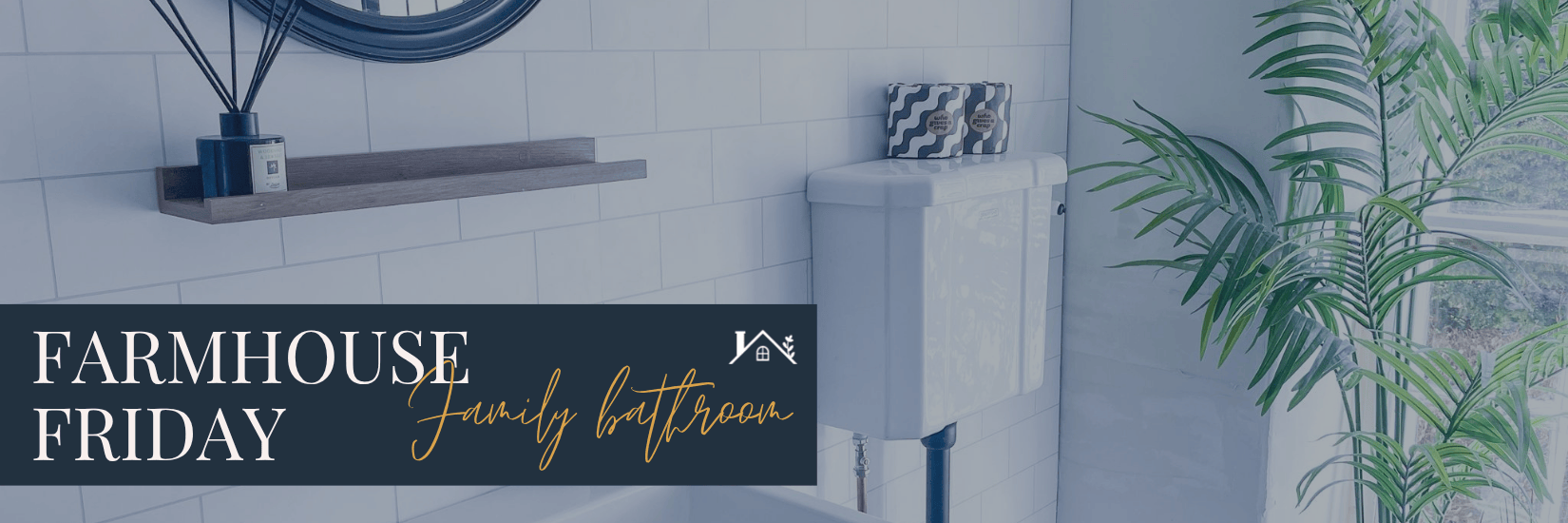
    Introducing my brand new series of Farmhouse Friday, where I’ll share a specific room within the house, and what’s happened this last week. The first room of the series is the family bathroom, which is pretty much done. It’s not been without its challenges; a Victorian farmhouse bathroom isn’t always straightforward. So check out the before and after, and how we managed to do this for less than £2.5k! I will caveat from the outset that the wall panels we used were kindly #gifted from Multipanel.

    Farmhouse Friday - Victorian farmhouse bathroom before and after (4)

    The room itself isn’t small as such, but does come with some limitations. It was originally part of a much larger room, hence the stunning, large window. However, this doesn’t immediately lend itself to a bathroom. Not only that, but it is long and thin, making it difficult to change any layout with great effect. And let’s not mention the 70’s pine cladding…

    Originally, there had been a bath, basin and toilet, and the layout wasn’t going to change. However, with 3 boys, we wanted to go for a large shower, rather than a bath. I also knew this would probably be the most used bathroom, so it needed to be easy to keep clean, too!

    A monochrome bathroom to me is timeless, and perfect to pick up/refresh with simple highlights if wanted. I did feel it would be very stark on its own, and so wanted to ensure some greenery was added to soften the look. The renovation itself was fairly straightforward, although we did come across a few hiccups.

    • The layout was already there, so no major work was required.
    • The window added a fantastic amount of natural light.
    • The panelling was pretty easy to install and went up in a day.
    • There was a small misunderstanding around the wall-hung basin, which means the plumber had to cut out the panelling once it had been installed. He very kindly cut out along the ‘grout’ of the tiles, so once back in place, it should be unnoticeable.
    • The window gives no privacy at all.

    Here is the breakdown of exactly how much the restoration cost and where we sourced everything from.

    Wall Panels – Multipanel UK – Alpine White Metro Collection (Very kindly #gifted) – P.O.A

    Floor TilesAmazon #Aff – £127.60

    Traditional Concealed ShowerVictorian Plumbing – £249.95

    Shower Tray & Screen Victorian Plumbing – £539.95

    Wall Hung BasinVictorian Plumbing – £129.95

    Traditional Wall Mounted TapsVictorian Plumbing – £139.95

    Traditional Low Level ToiletVictorian Plumbing – £299.95

    Soft Close Toilet SeatVictorian Plumbing – £79.95

    Traditional Style RadiatorVictorian Plumbing – £419.95

    Wall LightsDunlem – £64 (£32 each)

    Mirror B&M – £8

    ShelfB&M – £5 (have linked longer size for online, but shorter length available in store)

    Japanese ScreenAmazon #Aff – £89.99 The perfect solution to the privacy issue!

    Plants – My own

    Wooden Storage Unit – My own

    Shower WasteVictorian Plumbing – £37.95

    Basin Waste & Bottle TrapVictorian Plumbing – £89.95


    So, there we have it. The first of our Farmhouse Friday series, and a deep dive into our Victorian farmhouse bathroom before and after. If you have any questions, then please just ask, and I’d love to know if you like?!

    Would you consider using wall panels instead of tiles?!

  • A new chapter, old walls, and why I started over: welcome to How Felicity Finds

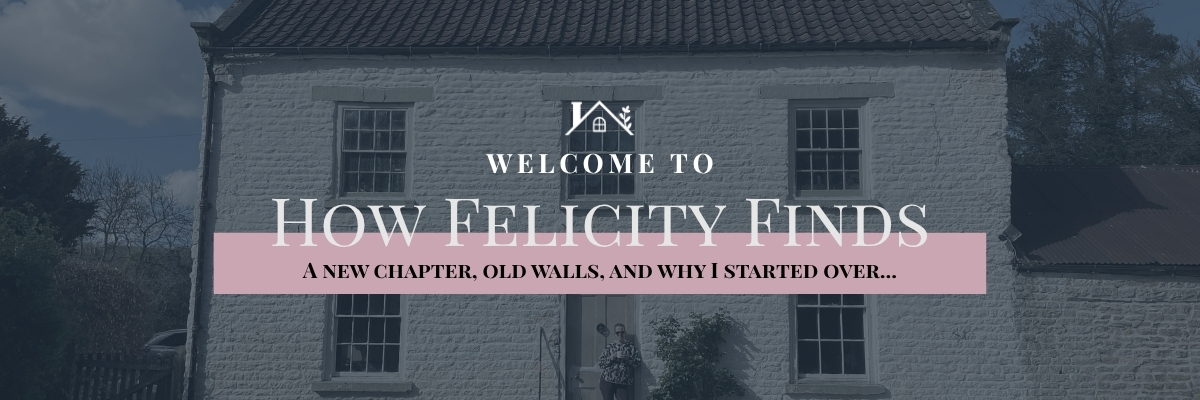
    A new chapter, old walls, and why I started over: welcome to How Felicity Finds

    I’m currently standing in the chaos that is our ‘kitchen’. The floor is still to be levelled and laid, and the kitchen is due to arrive next week. I’m beginning to wonder why I decided that documenting our Victorian farmhouse renovation and rebranding was a good idea! So many women are reaching their 40s and 50s, getting diagnosed with ADHD and/or navigating menopause — and realising they can’t keep living the way they always have… so they start again. Sound familiar?

    The community I built with ADHD Menopause and Me has been amazing. My account was initially set up to support me and my kids through some pretty tough years. We went from a ‘typical’ family to an ND family with diagnoses of Dyslexia, Delayed Processing, ADHD and now Autism. All in the space of 5 years. I was trying to navigate menopause and raise awareness, but I couldn’t understand why I found it so hard. Walking alongside my boys through their diagnosis journeys taught me something unexpected. I was neurodivergent too. Suddenly, a lifetime of feelings I couldn’t explain began to make sense.

    My journey looks different now. The boys are older, and life has shifted. But you are still here — and that means everything. I can’t wait to share this next chapter with you.

    Our youngest’s move to secondary school was, in a word, hard. What we’d hoped would be a fresh start quickly revealed itself to be something more significant. His struggles were deeper and more complex than any of us had fully understood.

    Over the years that followed, getting him into school at all became the daily battle. Alongside the dyslexia and ADHD we already knew about, it became increasingly clear that he was also autistic with a PDA profile. Once we understand that, so much of what had felt confusing suddenly makes sense. But his difficulties at school were almost secondary to what was happening socially. Too trusting, too easily led, and younger than his years in ways that weren’t always visible on the surface. I watched him begin to form friendships that worried me. Find himself in situations I couldn’t always protect him from.

    It was a lot. For him, and for all of us.

    At the same time, life was shifting in other ways. Our two eldest had flown the nest, and for the first time in years, there was space. Space to breathe, to think, and to ask what came next. More than a decade earlier, we had built our first home from the ground up, and that itch had never really gone away.

    So we made a decision. A deliberate, wholehearted one. We would move somewhere rural, somewhere slower, somewhere that might give Sam a genuine fresh start in an environment that actually suited him — and give us a new project to pour ourselves into, while still being a home our boys could always come back to.


    If you’d asked me a year ago what this space was going to become, I’m not sure I could have told you. But standing in the middle of a half-finished Victorian farmhouse in North Yorkshire, covered in renovation dust with an ADHD brain running at full speed and a body doing its best impression of a malfunctioning thermostat, it became pretty clear.

    It’s the farmhouse — Hall Farm, Victorian, Grade II listed, full of original features and full of renovation challenges I absolutely did not anticipate. I’ll be sharing every step of the restoration here, the wins, the disasters, the moments where we question every decision we’ve ever made. And of course, the ones where we look at an original sash window and remember exactly why we did this.

    It’s the village — Thornton-le-Dale is the kind of place you move to and immediately wonder why you didn’t do it sooner. The beck, the countryside, the slower pace of it all. I want to share what rural life actually looks like when you swap a village just outside the busy city of York for somewhere with a slower pace, woodland in your back garden and the North Yorks Moors on your doorstep.

    It’s the ND life — I’m AuDHD and menopausal and a mum to three boys who each come with their own version of complex, and I’m not going to pretend any of that is straightforward. The real talk about neurodivergence, perimenopause, and parenting ND kids stays, because it’s part of every single day here, and it deserves to be spoken about honestly.

    And it’s the finds — the things that actually help. Products, tools, places, services that make life in this particular messy, beautiful chaos a little more manageable. Always honest, never just because I’ve been asked.

    If you’re a woman in your forties navigating a big life change — or dreaming of one — and you want company that doesn’t pretend it’s easy, you are absolutely in the right place.

    I have a lot planned, and for once, the ADHD hyperfocus is working entirely in our favour.

    Every Friday, I’ll be posting a Farmhouse Friday update — one room, one decision, one honest account of where we are with the restoration. We’re starting with the bathroom, which is the one space we’ve actually finished, and working our way through the rest of the house in real time. No staged reveals, no waiting until it’s perfect. You’re getting it as it happens.

    I’m also putting together a proper guide to Thornton-le-Dale — the walks, the places to eat, the things the locals know that don’t make it onto any tourist website. If you’ve ever thought about making a move like this, I want that guide to be the thing that helps you imagine it for yourself.

    And the AuDHD and menopause content isn’t going anywhere. In fact, I’ve got a post coming that I’ve been wanting to write for months about what executive dysfunction actually looks like when you’re also trying to manage a renovation, a family, and a rebrand simultaneously. Spoiler: it looks exactly as chaotic as you’d imagine.

    The best way to keep up is to follow along on Instagram at @how_felicity_finds, or subscribe below to get new posts straight to your inbox. No spam, no schedules — just a new post when it’s ready.


    This is a new chapter. The walls are old, the floors are (mostly) original, and I am very much a work in progress — but that’s rather the point.

    I’m glad you’re here. I hope you stay.

  • Our Guest Bedroom Design Plan: French Blues, Toile & Timeless Details

    Our Guest Bedroom Design Plan: French Blues, Toile & Timeless Details

    There’s something about a guest bedroom suite that feels a little more considered than the rest of the house. A space that determines friends and families stay. It should feel calm, welcoming, and quietly thoughtful — somewhere that allows people to completely switch off.

    From the beginning, I knew I wanted this suite to feel timeless and fresh. Classic and gently layered rather than overly fussy. A space that feels like it’s always been there.

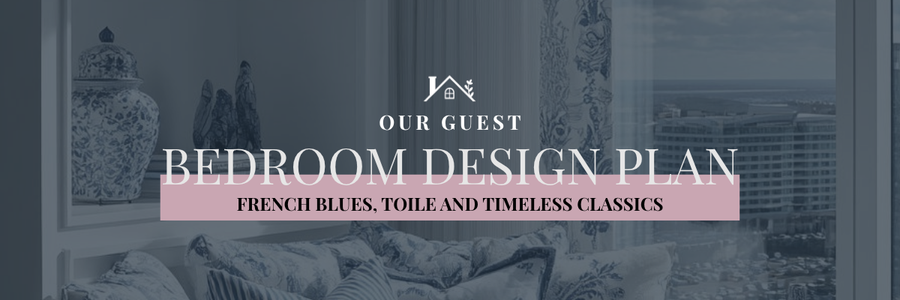
    The direction for this room came together quite quickly. I kept coming back to the same feeling: soft blue tones, traditional patterns, and that slightly nostalgic, French-inspired aesthetic that never really dates.

    It’s a look that sits somewhere between:

    • relaxed country house
    • understated elegance
    • and a touch of coastal calm

    Nothing too polished. Nothing too perfect.

    Pattern plays a really important role in this room, through not only the fabrics, but also the decor.

    With the fabric, toile is the obvious hero here — it brings that classic French feel instantly, but in soft blue it feels fresh rather than overly traditional.

    Alongside this, I’ll add in:

    • ticking stripe for structure
    • soft, textured neutrals to balance things out

    The key is contrast without chaos — mixing patterns, but keeping everything within the same tonal family so it never feels busy.

    The furniture choices lean towards the traditional, but with just enough contrast to keep it looking fresh and modern.

    The metal bed frame adds a slight edge and stops the room from feeling too delicate or overly “pretty”. It anchors the space and gives a bit of definition against the softer palette.

    Painted wood pieces in soft blue tones tie everything back to the scheme, keeping the look cohesive without feeling overly matched.

    Lighting and accessories are where the room really softens.

    Wooden lamp bases, simple white shades, and subtle blue & white decorative pieces help build that layered, lived-in feel. Nothing is too styled or overly curated — it’s more about creating a space that feels comfortable and natural.

    Small details, like books, china, florals, and soft textures, help the room feel finished without trying too hard.

    For me this room was all about feeling fresh and inviting.

    It would be easy to add more — more pattern, more colour, more “moments” — but the intention is to hold back. To let each element breathe.

    Because ultimately, the goal isn’t just to create a beautiful room.

    It’s to create a space that feels calm the moment you walk into it. Somewhere that feels quietly put together, without needing to shout about it.

    With the design direction now in place, the next step is to bring everything together — and see how it translates from moodboard to real life.

    Because if there’s one thing I’ve learned already, it’s that no matter how carefully you plan…

    Something always changes along the way.


  • How to Create a Moodboard for a Home Renovation Using Pinterest and Canva

    How to Create a Moodboard for a Home Renovation Using Pinterest and Canva

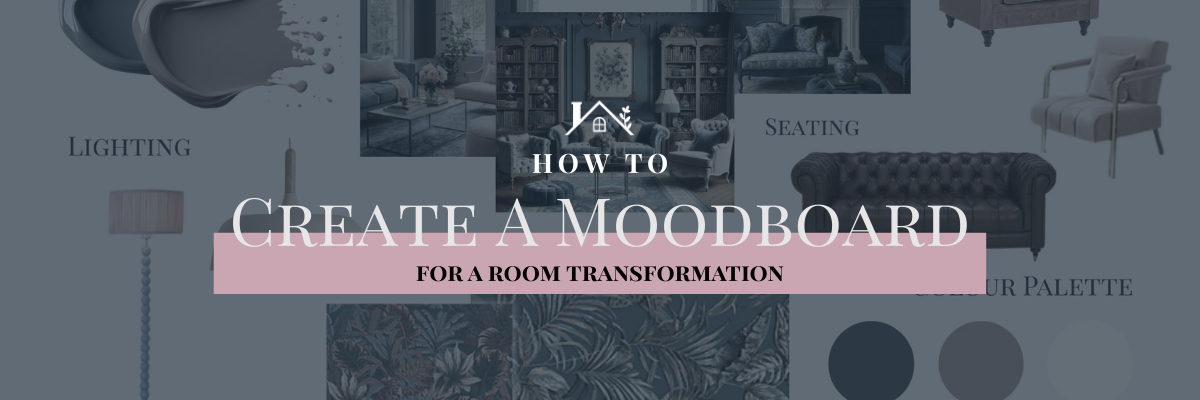
    Planning a home renovation can feel overwhelming — especially when you’re renovating a character property or listed building, where every decision matters and changes can be costly. One of the simplest ways to bring clarity to your ideas before the dust, disruption and design decisions begin is to create a moodboard.

    Using Pinterest to gather inspiration and Canva to pull it all together, you can create a clear, visual direction for your renovation or room trannformation — without needing a designer or expensive software.

    I love a good moodboard, here’s how I easily get my ideas out of my head and onto paper.

    When renovating a period or listed property, it’s easy to fall into one of two traps:

    • Playing it too safe and losing character
    • Mixing too many styles and ending up with a confused space

    I find a moodboard helps ensure you strike a balance.

    It allows you to:

    • Visualise the finished space before committing
    • Keep character and history front of mind
    • Make confident decisions on paint, materials and finishes
    • Communicate your vision clearly to trades and suppliers

    Think of it as your renovation compass — something to return to whenever decisions feel hard. I quite often find I’m still updating/tweaking as the journey moves on and I learn more about the building.

    how to create a moodboard for a room transformation

    Pinterest is your starting point for exploration.

    Instead of something vague, be specific:

    • Victorian Farmhouse Living Room Moodboard
    • Listed Building Kitchen Renovation
    • Neutral Country Bedroom Ideas

    This helps Pinterest serve you better suggestions — and keeps your ideas cohesive. You can then break it down into sections within that board. I did this to keep all the bathrooms together, but then had a section for each specific bathroom. You could also use to split out flooring from lighting etc. Whatever works best for you.

    At this stage, don’t analyse too much. Pin anything that:

    • Stops you scrolling
    • Feels like the atmosphere you want
    • Includes colours, textures or layouts you’re drawn to

    Look for:

    • Whole rooms
    • Close-ups of finishes
    • Architectural details
    • Lighting styles
    • Flooring Styles

    Aim for 25–40 pins initially.

    This is where the magic happens.

    Go back through your board and remove anything that:

    • Feels trendy rather than timeless
    • Doesn’t suit the age or character of your home
    • Clashes with the overall mood

    Patterns will start to emerge — similar tones, materials, layouts or styles. That’s your direction revealing itself.

    Before you open Canva, take a moment to get clear on the big picture.

    Ask yourself:

    • Is this space warm or light?
    • Rustic or refined?
    • Traditional with modern touches?

    Most renovation moodboards come down to:

    • 2–4 core colours
    • 1–2 dominant materials
    • One clear overall feeling

    You’re not choosing exact products yet — you’re defining the vibe.

    Canva is perfect for turning inspiration into something tangible.

    Search Canva for:

    • “Interior moodboard”
    • “Collage”
    • Or use a blank A4 or square canvas

    Simple layouts work best, especially for renovation planning.

    how to create a moodboard

    Download your favourite pins and upload them to Canva.

    Tips for arranging:

    • Mix wide shots with close-up details
    • Group similar tones together
    • Leave breathing space — less is more

    Your board should feel calm and intentional, not busy.

    This is what transforms a moodboard from inspiration to a working tool.

    Use Canva’s shapes to add swatches representing:

    • Wall colours
    • Wood tones
    • Accent shades

    You can sample colours directly from images using Canva’s colour picker.

    Light, minimal text works well:

    • “Warm neutral walls”
    • “Natural timber throughout”
    • “Soft aged brass finishes”

    This is especially helpful if you’ll be sharing the moodboard with trades or suppliers. You can also play around with Canva’s elements if you want to add graphics such as arrows, or in my case, a paint ‘splodge’ to help really bring the paint colours to life.

    Step away and come back later.

    Ask yourself:

    • Does this feel cohesive?
    • Does it suit the age of the property?
    • Will I still love this in five years?

    If something feels off, tweak it. Moodboards are meant to evolve — just like renovations. Quite a few of mine are still being tweaked now, as my ideas develop.

    A renovation moodboard isn’t about having all the answers — it’s about creating confidence.

    Using Pinterest and Canva together gives you:

    • Direction without pressure
    • Inspiration without overwhelm
    • A clear vision to guide every decision

    If you’re renovating a home with history, this step is invaluable. It keeps the soul of the house intact while making it work for modern life.


    👉 If you’re mid-renovation, you’ll find more moodboards, real-life decisions and honest progress over on my renovation playlists on YouTube — don’t forget to subscribe so you don’t miss what’s next.

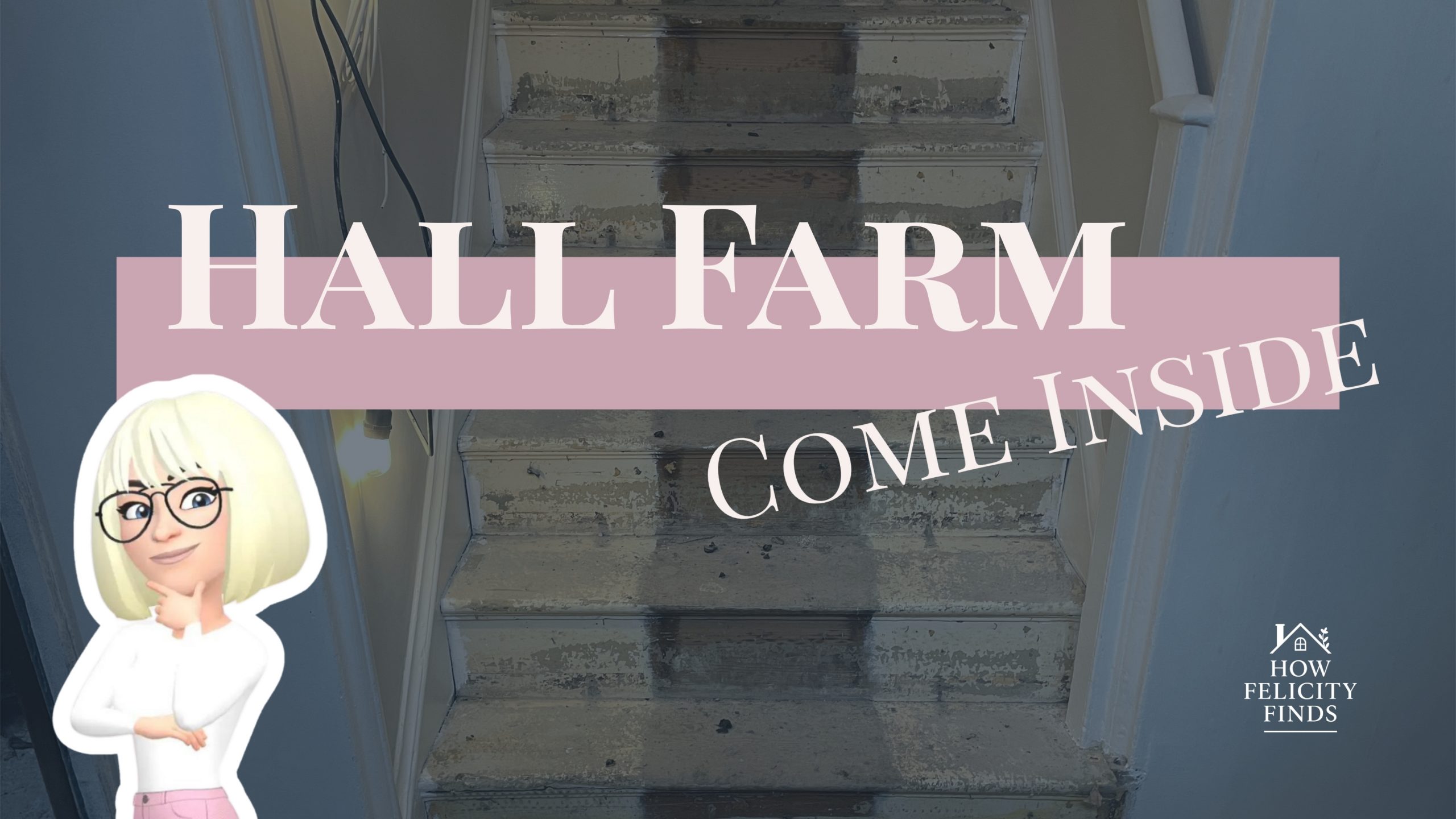
  • Hall Farm Come Inside Our Grade II Listed Farmhouse

    Hall Farm Come Inside Our Grade II Listed Farmhouse

    Before we bought our Grade II listed Victorian farmhouse, we had just 10 minutes to look around.

    No second viewing.
    No measuring.
    No time to fully process what we were taking on.


    That short window became the moment we decided whether to buy the house that’s now our biggest project yet.

    I’ve shared a walkthrough in my latest YouTube video in roughly the same amount of time, to give you an idea of just how little time we had! It’s a little raw in places (all my proper filming equipment is currently in boxes somewhere), but it captures the reality — the unknowns, the nerves, and the spark that made us say yes anyway.

    Since then, the progress over the last few weeks has been incredible — and we’re now just weeks away from finally moving in.

    If you’re interested in property, renovation, heritage buildings, or the reality of taking on a long-term project alongside full-time work and family life in video, then subscribe to the YouTube channel. It will give you a great insight as our journey progresses!

    🎥 Watch the video above

    Sometimes the biggest decisions really do happen in the smallest windows of time.


  • 3 months of Restoration at Hall Farm: Listed Building Renovation in Yorkshire

    3 months of Restoration at Hall Farm: Listed Building Renovation in Yorkshire

    As a new year begins, we’ve found ourselves looking back at just how much has changed at Hall Farm over the past three months. Owning a listed building in the heart of Thornton-Le-Dale, Yorkshire, has always felt like a privilege, and these last few months truly marked a turning point in our renovation journey. What once felt like an endless to-do list has slowly transformed into real, tangible progress.

    Much of the work completed so far hasn’t been the glamorous, Instagram-ready kind — but it has been essential. We began by completely rewiring and replumbing the house, carefully threading modern infrastructure through centuries-old walls. These upgrades were designed to future-proof Hall Farm. Ensuring it remains safe, efficient, and comfortable, while respecting its historic fabric.


    Alongside this, we installed a brand-new boiler — a small miracle for anyone who has lived through a Yorkshire winter in a draughty old farmhouse. The chimneys have been inspected, made safe and will be restored fully this year. It has made an enormous difference to daily life here.

    Some of the most satisfying moments came from restoring what was already here. We have spent weeks dipping, sanding and waxing the original doors and windows, bringing their character back to life. The last of the windows will be refitted this month. The same goes for the original beams, which were carefully sandblasted to reveal their age, texture and history — a reminder of just how many stories these timbers have held.

    The kitchen, once dark and impractical, was completely ripped out. While it’s still very much a work in progress, clearing the space felt symbolic — making room for something new while honouring what came before.

    Perhaps the most traditional craft we embraced this year was lime plastering. Messy, slow and incredibly rewarding, it has helped the house breathe again. As well as reinforced our commitment to sympathetic restoration rather than quick fixes.

    When we stand back now, Hall Farm feels healthier, stronger and more itself than it has in decades. There’s still plenty to do, but this year laid the foundations — literally and figuratively — for everything to come.

    If you’d like to follow along as we continue restoring this little piece of Yorkshire heritage, we’d love you to subscribe and join us for the next chapter.


  • Restoring Hall Farm: From Historic Farmhouse to Family Home

    Restoring Hall Farm: From Historic Farmhouse to Family Home

    When we bought Hall Farm, we knew we were buying more than just a new house. We were buying a piece of Thornton-Le-Dale history. Consequently, as part of our renovation/planning application to North York Moors, we had to commission a heritage statement. It’s been fascinating to read and learn more about our new home.

    In the heart of the village, set back from the main road, lies Hall Farm — a structure with a rich past and a promising future. Originally established in the late 18th century, Hall Farm was constructed as a working farmhouse. Moreover, it was designed to support generations of tenant and owner-occupier farmers in this quiet corner of Yorkshire. There are still signs of its original use, which we can’t wait to restore. Over time, the building has witnessed the rhythms of the land, now in another winter marked by hearth-fires and strong Yorkshire winds. I’d love to know what stories lie beneath the decades of paint and plaster…

    Through the Victorian era, the farm adapted: improvements were made, outbuildings added. The farmhouse itself saw modest extensions to accommodate growing farm households. In the 20th century, agricultural practices changed, and small farms struggled to remain viable. Hall Farm changed hands and ceased to function as a full-scale working farm. While the structure remained, many original features were altered or lost. Over the past decade, the home has gradually fallen from its former glory.

    We are excited to be part of a new chapter for Hall Farm: the property is undergoing careful renovation and conversion back into a family home, with a deep respect for its heritage. We aim to restore original features where possible — exposed stone walls, timber beams, historic windows. While sensitively introducing modern comforts: heating, insulation, and family-friendly layouts. We are committed to honouring the building’s past as a working farm while bringing it back to life as a place of warmth, domesticity and family-centred living.

    As we progress, we hope Hall Farm will again echo with laughter, footsteps on old floorboards, and the smells of home-cooking. A true restoration of its former glory, blending history and home in one beautiful place. Stay tuned for updates as this restoration journey unfolds.

  • Seeing Our Kitchen, Boot Room & Utility Designs for the First Time

    Seeing Our Kitchen, Boot Room & Utility Designs for the First Time

    There’s something magical about the moment you finally receive the first proper designs for your kitchen, boot room, and utility. After months of planning, measuring, mood-boarding, and daydreaming, suddenly it all becomes real. Today, that moment arrived for us, and it feels like the start of a whole new chapter in bringing this old house back to life.

    When the email arrived this morning from James at Omega PLC, I was in full work mode, but I couldn’t help myself…

    Opening the email felt a bit like opening a present you’ve been waiting ages to open. Each image suggestion offered a glimpse into how some of the oldest rooms in the home will function for us in day-to-day life. For a neurodiverse household like ours, flow, clarity, and intuitive organisation aren’t just nice-to-haves—they’re essential. And seeing it all mapped out so thoughtfully was genuinely exciting.

    The proposed kitchen layout balances practicality with warmth, giving us a space that feels welcoming without compromising on storage or efficiency. The boot room design is particularly exciting: a designated drop zone for muddy shoes, bags, coats, and everyday chaos. If any space is going to save our sanity on busy mornings, it’s that one. And the utility room feels like the unsung hero—tucked away but designed to make laundry, cleaning, and general household upkeep run so much smoother.

    Through the whole kitchen design planning process we very much wanted to keep a traditional feel to the kitchen. In terms of look, colour and cabinet hardware; but also ensuring that it had a timeless feel with a modern shaker style.

    Of course, seeing the first round of designs also sparks a flood of ideas. Maybe you want to tweak the lighting positions, add more built-in storage, shift a window, or incorporate materials that echo the original character of the house. This early stage is all about refining, imagining, and making sure the design truly reflects how your family lives.

    I added the boot room detail from the original concept, along with a tall cabinet specifically to house the ironing board, mop etc. But am especially excited about my pull out ‘drawers’ under the washer & dryer, so I can place the wash baskets on when filling/emptying the machines. Oh and my pot tap above the range!

    Now that the designs are here, everything feels more tangible. It’s the start of transforming these essential rooms into spaces that work for our family—not just aesthetically, but practically, emotionally, and functionally. And honestly? It feels incredibly exciting.

    I’d love to know what you can’t live without in your kitchen, or something you wish you had? Comment below, can’t wait to hear!