Author: faystephenson

  • ADHD, Autism and Transition

    ADHD, Autism and Transition

    Transition can be tricky for everyone, especially for those with ADHD and Autism (ASC). These conditions can make shifting gears between activities, places, or routines hard. Both Sam and I struggle with transition, and while Sam is still learning how to cope and support himself, I can at least recognise the signs in both of us and support him as best I can.

    The English dictionary describes transition as ‘a change from one form or type to another, or the process by which this happens.’

    We all think about obvious transitions in our lives, like moving house or marriage. But there are everyday transitions that lots of people won’t even realise are transitions. Transitions that, for most people, are taken completely for granted.

    • Starting or ending a romantic relationship
    • Becoming a parent
    • Experiencing a loss
    • Reaching milestone ages
    • Serious illness or injury
    • Starting/moving school
    • Changing career
    • Retirement
    • Moving to a new home
    • Travelling abroad
    • Waking up from sleep to getting out of bed.
    • Finishing breakfast and getting dressed.
    • Leaving the house and starting your commute.
    • Switching between different tasks/subjects throughout the day.
    • Shifting from work or school to home/relaxation.
    • Finishing dinner and starting your evening routine
    • Winding down from the day and preparing for sleep.
    • Putting away electronics and getting into pyjamas.
    • Falling asleep and transitioning from wakefulness to rest.

    Sam, in particular, struggles with the transition of getting ready for school. Up until recently, it had not occurred to me that this was a transition, despite me having my own coping mechanisms to deal with the same morning transition. I’ll try and do as much as I can the night before, look out clothes, pack bag, look out lunch, set out travel mug ready to just fill in the morning, etc. All these little things mean I have way fewer stresses on my executive function to deal with when I’m getting ready.

    There’s a two-pronged answer to why people with ADHD and ASC struggle with transitions:

    1. Challenges for Both ADHD and ASC:

    • Executive Functioning: Both conditions can affect executive functioning skills like planning, organising, and shifting focus. Transitions require these skills to mentally prepare for the next activity, making them inherently difficult.
    • Predictability and Routine: Furthermore, ADHD and ASC often thrive on predictability and routine. Transitions disrupt established routines and introduce uncertainty, which can be anxiety-provoking and disorienting.
    • Sensory Processing: Many individuals with ADHD or ASC experience sensory sensitivities. Changes in the environment or stimulation during transitions can overwhelm and disrupt focus.

    2. Specific Challenges:

    • ADHD:
      • Hyperfocus and Inertia: People with ADHD can become hyperfocused, making it hard to switch gears away from a rewarding activity. Conversely, starting a new activity can feel overwhelming, leading to inertia (resistance to starting).
      • Time Management and Emotional Regulation: Transitions often involve time constraints, and people with ADHD may struggle to estimate time accurately, making transitions feel rushed and stressful. Additionally, managing emotions like frustration or anxiety during transitions can be challenging.
      • Reward System: Some theories suggest ADHD brains have a different reward system. Transitions disrupt the flow of the current activity, which can be less rewarding, making it harder to switch gears.
    • ASC:
      • Social Cues: Understanding social cues related to transitions can be difficult for someone with ASC. Body language or facial expressions signalling a transition might be missed, leading to confusion or frustration.
      • Need for Processing Time: People with ASC may need more processing time to adjust to changes. Transitions can feel abrupt and overwhelming without this time to prepare mentally.

    Remember, the severity of these challenges varies for each individual. Understanding these factors can help us develop strategies to support people with ADHD and ASC through transitions.

    For me, it is mostly executive function, so for morning struggles, as said, I try to do as much as possible in advance. However, I also need a lot of processing time, so having to get myself and two boys ready means getting up 30 minutes earlier so I can get myself ready, and then focus on them when I wake them.

    Sam struggles with not only the transition of getting ready, but also the sensory side of the school uniform. Seams being noticeable, clothes being tight or restrictive and scratchy fabrics close to skin can all be triggers for him. Add to that his need for predictability and routine, trying to regulate his emotions in a new situation, and his struggle with any loss of autonomy, then, as you can imagine, transition days in his new school are proving tough.

    Here are some tips for both ADHD and ASC:

    • Prepare for Change: Announce upcoming transitions well in advance, both verbally and visually (with timers, pictures, or checklists). Sam doesn’t cope with a lot of verbal interaction in the morning, so a lot of our cues are visual hand signals and pictures.
    • Chunk it Down: Break down large transitions into smaller, more manageable steps.
    • Provide Choices: Offer some control over the transition process (e.g., picking a goodbye song or choosing which shoes to wear first). For Sam, this works well as it really gives him the feeling of being in control.
    • Create a Predictable Routine: Establish routines for before, during, and after transitions to provide a sense of security.
    • Sensory Support: For sensory sensitivities, offer calming tools like fidget toys or noise-cancelling headphones during transitions. I never go anywhere without my fidget toy! For Sam, ensuring his socks are right makes a huge difference to the rest of the transition.

    Additional Tips for ASC:

    • Social Cues: Help with interpreting social cues related to transitions, like body language or facial expressions.
    • Safe Space: Provide a designated quiet space to de-stimulate after a busy transition. I love the drive home after work on my own to regulate myself. Sam loves a dark, quiet room when he’s particularly struggling.

    So, as we move from Easter holidays to BTS tomorrow morning, wish us luck. Not only are we transitioning from holidays to term time, but also the simple transition of getting ready and out of the house. And Sam is transitioning to a whole new school!

    Morning is definitely a hard transition for all of us. Another small transition I personally struggle with is moving from task to task at work. And big transitions I struggle with are travelling abroad and moving house. Do you have particular transitions that you struggle with? What have you found that helps?

  • Emotionally Based School Avoidance – All in the Mind?

    Emotionally Based School Avoidance – All in the Mind?

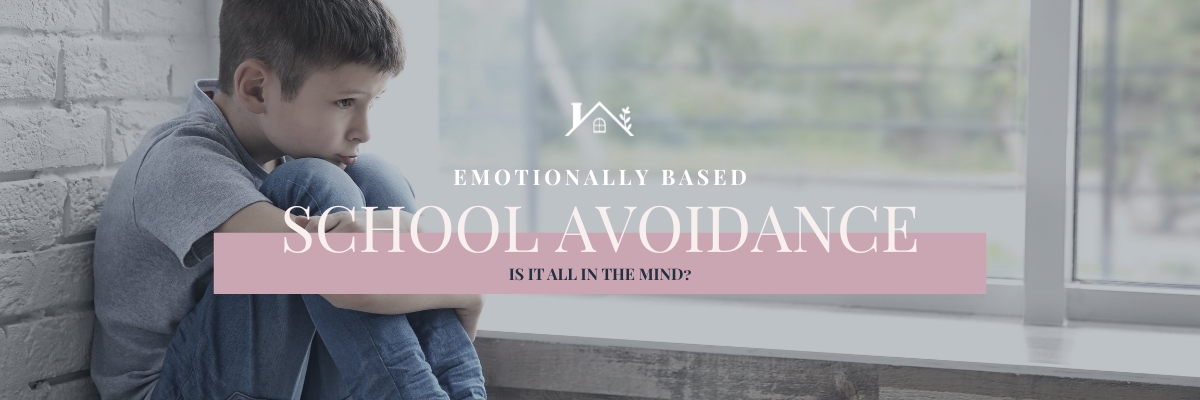
    In comparison to the end of last week, when Sam visited his new school and spent some time in class. This week was the complete opposite. I knew very little about Emotionally Based School Avoidance (EBSA) until last year when Sam had issues accessing school. ESBA is a term used to describe children and young people who experience significant difficulties attending school due to negative emotions and anxieties.

    Here’s a breakdown of ESBA:

    • Emotional Triggers: Anxiety, fear, or other negative emotions are the main reasons a child avoids school.
    • Difficulties Attending: These can range from occasional absences to complete school refusal.
    • Not Truancy: ESBA differs from truancy, where a child skips school intentionally without a valid reason.

    Causes of ESBA can vary but may include:

    • Bullying
    • Social anxieties
    • Specific learning difficulties
    • Transitions (e.g., starting a new school)
    • Mental health conditions like depression

    For Sam, the transition to a mainstream secondary school had been too much. As the weeks and months went by his ability to cope reduced. Despite every effort to integrate his level of study into a mainstream setting, he became more and more dysregulated. His differences became more obvious, and the once-happy boy I knew became withdrawn and angry.

    The fight to get him into a specialist setting more adept at educating him and letting him thrive wasn’t anywhere near as bad as some families I know, and for that I am thankful. Yet it wasn’t without its struggles either. However, as many of you know we managed to secure his place for this Sept at the school of our choice. I thought the fight was over. How wrong I was…

    By this time Sam was accessing school less and less, and by Spring Term we were lucky if he managed to go to school once a week. School have offered various solutions, but they’ve all just been too little too late. The damage was done by then and he would shut down at the mere mention of school. To some, this is hard to understand. They can’t see past the behaviour, so see a kid refusing to go to school and ‘getting away with it’. What they don’t see is the emotional turmoil the child goes through just trying to access that education and the dysregulation it causes if they do manage to get to class.

    • Sharp Increase: Persistent absence rates (missing 10% of school) have soared since the pandemic. In the 2022/23 Autumn term, 22.3% of pupils were persistently absent, compared to 10.9% pre-pandemic (2018/19) – more than doubling [Anna Freud, Children’s Commissioner].
    • Underlying Issues: EBSA is the root cause for a significant portion of this increase. While exact numbers are tricky to pinpoint, estimates suggest 1-2% of those missing school persistently do so due to emotional reasons [Absolutely Education UK].
    • SEND and EBSA: Children with Special Educational Needs and Disabilities (SEND) are particularly vulnerable. Absence rates for pupils with an Education, Health and Care Plan (EHCP) are significantly higher (12.1% vs 6.8% without SEN Support) [Beyond Autism].
    • Pre-existing Trend: Even before the pandemic, persistent absence rates were steadily increasing.
    • Mental Health Connection: Many experts believe the pandemic exacerbated mental health issues in children, contributing to EBSA.
    • Impact on Learning: Missing significant school time can have a detrimental impact on a child’s education.

    Having had such a positive step with Sam the week before, I wrongly forgot just how much he struggles with transition and change. When Monday came he flat out refused to go to school. A transition morning that Wednesday for all the new kids starting in Sept (3 plus Sam) seemed like a good opportunity for Sam to try again, as he wouldn’t be the only new kid. We managed to get as far as the school reception, I could see he was struggling. We went home and he had one of his worst days in a long time in terms of dysregulation, and meltdowns. I haven’t felt such a failure in a long time.

    He’s begun asking to go to his mainstream school instead (it’s familiar and ‘comfortable’ in a weird way). They even offered alternative provision but I’ve not taken up the offer as I think it will just confuse him. For me, we have to remove all other options and let him focus on accessing his new setting. He has so many negative emotions associated with school, it’s gonna take time.

    I’m the worst mum in the world as I’m making him move to a new school, make new friends and get to know new teachers. Right now he can’t see past that change. It’s going to be a long process. It’s so funny how many people asked me after Friday ‘So, is that him all settled now?’. If only it were that easy. Parents of SEND kids and those struggling with Emotionally Based School Avoidance will completely understand the journey.

    In the meantime, I still haven’t heard from CAMHS about his further assessments. Until I hear from them, then I don’t know exactly what he is being assessed for. I feel utterly lost if I’m honest. He’s struggling so hard and it’s difficult to watch, I know it will take time. In the meantime, we still don’t know his actual diagnosis to ensure we are correctly supporting him. Develop strategies that will actually help him, rather than possibly trigger him. So it’s off to hyperfocus on all things EBSA for a bit, will see you on the other side…

  • 60 Ways To Improve Family Life in 60 Secs

    60 Ways To Improve Family Life in 60 Secs

    Sid Madge is the author of ‘Meee in a Family Minute’ and founder of The Meee Programme.  In 2009, Sid chose to relocate from London to a remote corner in North Wales and build a new business.  Running a workshop at a local school, Sid was shocked by the self-esteem of the students.  Asked to describe themselves, 15% used terms such as ‘freak’, ‘weirdo’ and ‘misfit’.  He felt urged to take action, and the Meee Programme was born.

    His first book, ‘Meee in a Minute – 60 ways to improve your life in 60 seconds’ has become a best-seller. It recognises and affirms the work of the Meee Programme, which encourages everyone to recognise and believe in their abilities. More and more in these unprecedented times, we are looking to rebalance our family lives and relationships. Could ‘Meee in a Family Minute’ provide some family support and do just that?

    I was sent an email in June asking if I would like to improve my work-life balance.  Now, anyone who knows me knows that I am passionate about family life and about wellbeing.  So it immediately grabbed my attention. ’60 Ways to Improve Your Family Life in 60 Seconds’ is the third in the series of ‘Meee in a Minute’ books from Sid Madge.

    I was very lucky to be gifted a copy of the book, and I have to say, as soon as I began reading, I knew this book was special.  I struggled to put down, but the fantastic thing is that each chapter literally takes less than a minute to read.  Therefore, you can make small changes with immediate effect. As with everything, rather than try to change lots at once, we need to walk before we run.  The book is full of useful tips and strategies to help with family support. To help engage with, enjoy and reconnect.  So as I read through, I marked the chapters I wanted to bring to our family life.  I then narrowed it down to my Top 5, which I am determined to work on over the summer with us all.

    As with everything, rather than try to change lots at once, we need to walk before we run.  The book is full of useful tips and strategies to help with family support. To help engage with, enjoy and reconnect.  So as I read through, I marked the chapters I wanted to bring to our family life.  I then narrowed it down to my Top 5, which I am determined to work on over the summer with us all.

    1. Cut down on screen time – From Home School to Lockdown, it has increased the whole family’s screen time exponentially.  The holidays and relaxation in lockdown gave us the chance to cut back on our screen time as a family, but it’s hard not to fall back into the same old routine.
    2. Family Values – This is something really important to me, and I want the boys to have something visual, to reaffirm those values daily.
    3. Read Aloud to your kids – Cutting down on screen time allows us time to start reading more, too.  The older boys and I have a stack of books to get through this summer.  But for Samuel with his Dyslexia, it’s not so easy.  Reading aloud to him will hopefully give him that love of reading and encourage him with his reading.
    4. Play Together – We cracked on with this last night after ordering more shuttlecocks (Daisy keeps eating them).  The Badminton tournament is going strong.  Just seeing all the boys playing out in the garden happily together was lovely.  After tea, Monopoly came out, and a request for UNO to be played tonight! A great start,
    5. Be The Change – I think being stuck at home has made me more aware of how my personal behaviour affects the boys.  My anxiety about lockdown has poured over into angry outbursts and a feeling of loss of control.  In Sam, I can see some of those traits in him.  I need to be the change…

    This Pocket-sized book is jam-packed full of actionable family support to enable you to use now, or simply to read through and realise that, actually, even in the madness of lockdown, you are doing a good job! But we should never stop learning, just as our children don’t.  This book is perfect for those times when you are a little unsure. When you know you want to make a change or help, but aren’t quite sure how to do it best. Or one of your kids needs a little more support.  From chapters on ‘Family Time’ or ‘Don’t Take it Personally’ to ‘No Regrets’ or ‘Never Criticise’, it really does manage to cover everything.  I would thoroughly recommend and have just ordered the previous two books in the series.

    If you are interested in learning more about the Programme and what it can do for you, your colleagues, or students, then please check it out.  Fascinating read…

    I’ll keep you posted on how our small changes go over the next few weeks.  I’d love to hear if you read and what you think.  Or what you’d love to develop within your family this summer!  Comment below.